News
From Circular Economy Goals to Tangible Business Impact
- Circular design
- Circular economy

Miia Pöytälaakso
Communications Specialist
+358 400 613 530
miia.poytalaakso@designforum.fi
Circular economy is increasingly recognized as a driver of business growth and competitiveness. Yet, many organizations still struggle to understand how to turn circular economy principles into profitable business models. The DeCo Round Table, organized by Design Forum Finland, brought together companies, experts, and stakeholders to explore how business can be transformed through circular practices.
Design Forum Finland hosts regular roundtable discussions as part of the international Design Collaboration for Sustainable Business (DeCo) project. These events provide a platform for project partners and stakeholders to examine current circular economy topics. In a virtual meeting held at the end of January, the discussion focused on the implementation of circular business models.
The keynote presentation, Implementing Circular Economy Practices – Sustainable Business Models Across Industries, was delivered by Emma-Sofie Kukkonen, Head of Design at Impaktly. Kukkonen offered practical insights into circular business models, including strategies for transforming linear value chains into circular ones, key drivers of business value in circularity, and concrete examples from both European and Finnish markets.
Economic Potential of the Circular Economy
The economic potential of the circular economy is significant. The European market for circular consumer goods is estimated at €400–650 billion, with expected annual growth of 10–15%. The share of circular business within the overall market could reach 25–35% by 2030. Numerous corporate examples demonstrate that the shift can deliver rapid results: for instance, Decathlon increased its margins 2.4 times in just one season through its outdoor gear rental service.
The remanufacturing market is expected to grow at an annual rate of 20–30%.
The potential of the circular economy in industry is equally significant. In the EU, circular practices are estimated to enable up to $630 billion in net material cost savings, while 73% of executives in companies investing in circularity expect a positive revenue impact within three years. The global remanufacturing market for industrial machinery is projected to grow 20–30% annually between 2025 and 2029.
Finnish companies are also putting circular principles into practice. Fiskars has integrated circularity into product design and decision-making processes, applying a gate-model to ensure that circular criteria are considered at every stage. Products are designed for maintenance, durability, and repairability, while the material strategy aims to reduce or replace environmentally harmful materials without compromising product longevity. Fiskars also strengthens customer loyalty through life-cycle services, such as coatings and spare parts. The company’s goal is to develop business models driven by product life-cycle and resource efficiency, aiming for the majority of revenue to come from circular products and services by 2030.
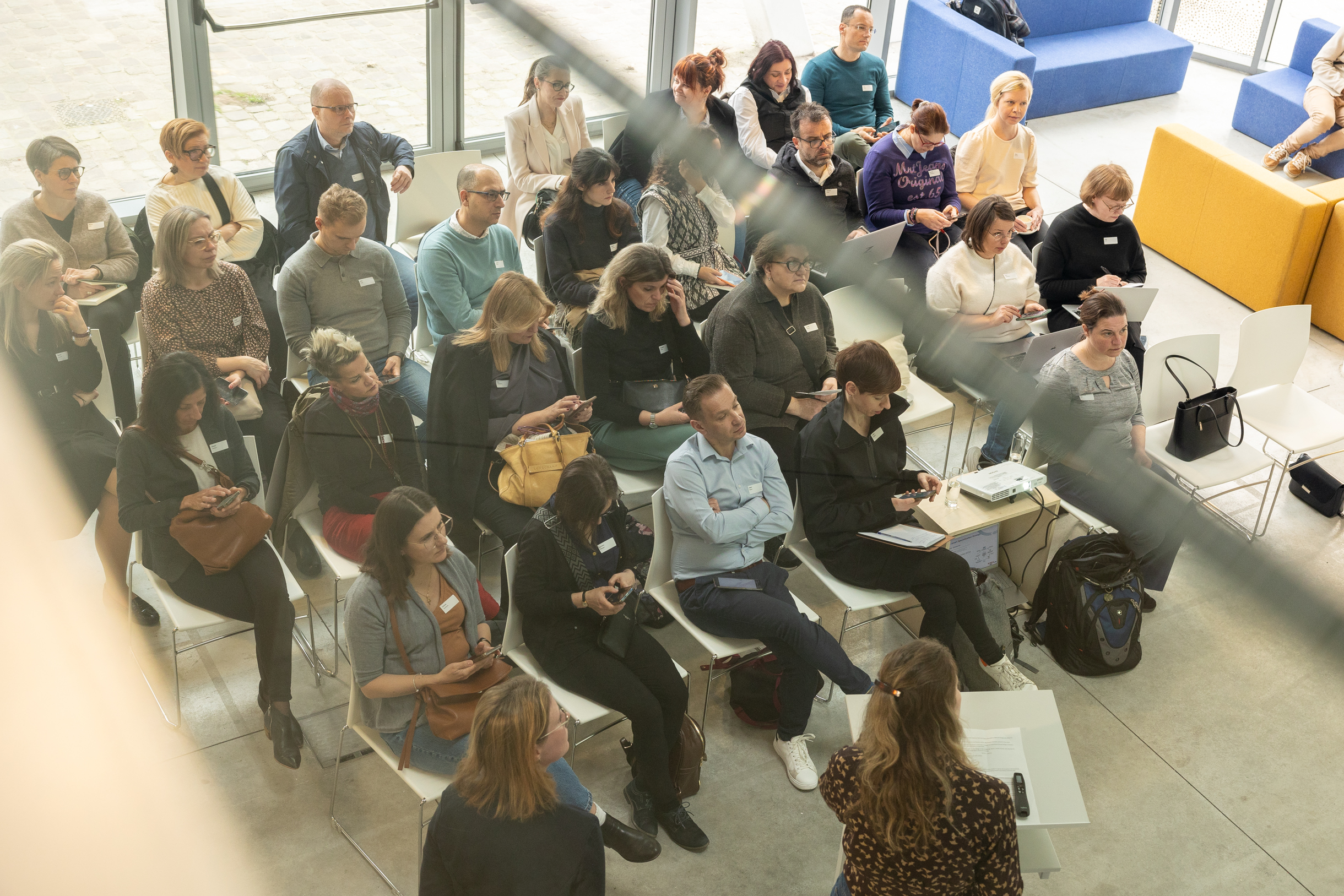
Following the keynote presentation by Emma-Sofie Kukkonen of Impaktly, participants were divided into four breakout groups to focus on implementing circular business models. The discussions were facilitated by the Futures Mundane team and centered on four deliberately incomplete and challenging business cases, representing sectors such as manufacturing, consumer goods, logistics, and mobility. Groups explored how selected companies could leverage circular economy value drivers to build credible and scalable business models.
This approach shifted the conversation from general sustainability rhetoric to tangible value creation, cost reduction, and risk management, while highlighting how similar circular economy challenges and opportunities are across different industries.
Key Insights: What Makes Circular Economy Work for Business?
The DeCo Round Table discussions highlighted several factors that are critical for successful circular economy implementation in businesses:
- Business value drives action: Circular economy initiatives become tangible when their benefits can be measured through value creation, cost savings, and risk management.
- Design and life-cycle thinking: Product design and life-cycle approaches provide low-threshold entry points for implementing change.
- Ecosystems: No single company can advance circularity alone; partnerships and collaboration across value chains are essential.
- Regulation and financing: Public policies, procurement practices, and funding can either accelerate or hinder circular innovation.
- Capability building: Shifts in mindset and practical skills are as important as technology.
The roundtable confirmed that the circular economy is a concrete way to create value, strengthen competitiveness, and build sustainable business models. By combining circularity with clear business logic, cross-sector collaboration, and practical experimentation, it can become a powerful strategic engine for growth.
Sources: McKinsey, Statista, Ellen MacArthur Foundation, Decathlon, Goldman Sachs, Technavio, World Economic Forum
What is DeCo?
Design Collaboration for Sustainable Business (DeCo) is an Interreg Europe-funded project aimed at strengthening regional and national initiatives that promote sustainable design, production, and manufacturing based on circular economy principles. The project brings together ten regional partners from seven European countries: Croatia, Spain, Greece, Poland, Belgium, the Czech Republic, and Finland. DeCo supports the EU’s goals of reducing emissions, increasing the use of sustainable products, developing circular business models, and encouraging consumers to transition to greener choices. The project achieves these objectives by sharing knowledge on practical experiences and innovative approaches, and by building skills. Knowledge exchange is a key component, enabling participants to learn from one another, form new partnerships, and even launch new initiatives.