Hankkeet
The fifth partner meeting of the DeCo project was held in Croatia
- Circular design
- Circular economy
- Sustainable design
Marika Lehti
Service Designer, Project Coordinator
+358 50 566 4698
marika.lehti@designforum.fi
Design Forum Finland is participating in the Design Collaboration for Sustainable Business project led by LAB University of Applied Sciences, which promotes regional and national sustainable development practices with a particular focus on circular design, production and manufacturing. At the beginning of May, the project’s partner organisations and stakeholders visited the Međimurje county in Croatia as guests of the regional development agency REDEA. This phase of the project focuses on innovation, industrial transition and emerging technologies in the sustainability transition.
Croatia is transitioning from a traditional manufacturing-based economy towards higher value-added industries. The shift is currently being driven by investments in innovation and regional development policies, alongside increasingly close cooperation between public administration, academia and businesses. The Međimurje county, where project participants visited local companies over the course of two days, offers a strong example of this development in practice.
As the role of traditional manufacturing continues to decline within the national economy, the focus is moving towards creating jobs with greater added value. Growth sectors currently include the forest industry, betting and gaming, security, healthcare, real estate, and the food and beverage industry.
While the impacts of climate change have been widely recognised, environmental responsibility is still not considered a central strategic priority among many start-ups. Resource efficiency is increasingly viewed as the most important sustainability factor, yet circular economy practices remain relatively limited at this stage.
During the first day of the meeting, participants were given a comprehensive overview of the current state of the Croatian economy and the country’s future strategic direction. The introductions were given by Stjepan Marković from the Ministry of Regional Development and EU Funds and Zoran Aralica from the Institute of Economics in Zagreb
Did you know that Croatia is behind several globally recognised innovations? Among the country’s best-known inventions are the torpedo and the mechanical pencil. Even the classic necktie — the cravat — is originally derived from Croatian military uniform from 17th century.
Company Visits in the Međimurje County
During the visit, participants explored several companies operating in the Međimurje county. Sobočan, known for its high-quality retail furniture and interior solutions, and Swooda, a design studio specialising in retail design, presented their projects and shared insights into their sustainability work.
Swooda’s design approach is guided by three core principles that shape all of its projects. The first, Design with Purpose, emphasises design that responds to real needs while creating solutions, inspiration and added value for users. The second principle positions sustainability as a standard rather than a separate objective, influencing both material choices and production processes. The third principle, accessible excellence, highlights inclusivity and accessibility as essential components of good design. The company’s goal is to ensure that high-quality design remains both approachable and available to as wide an audience as possible.
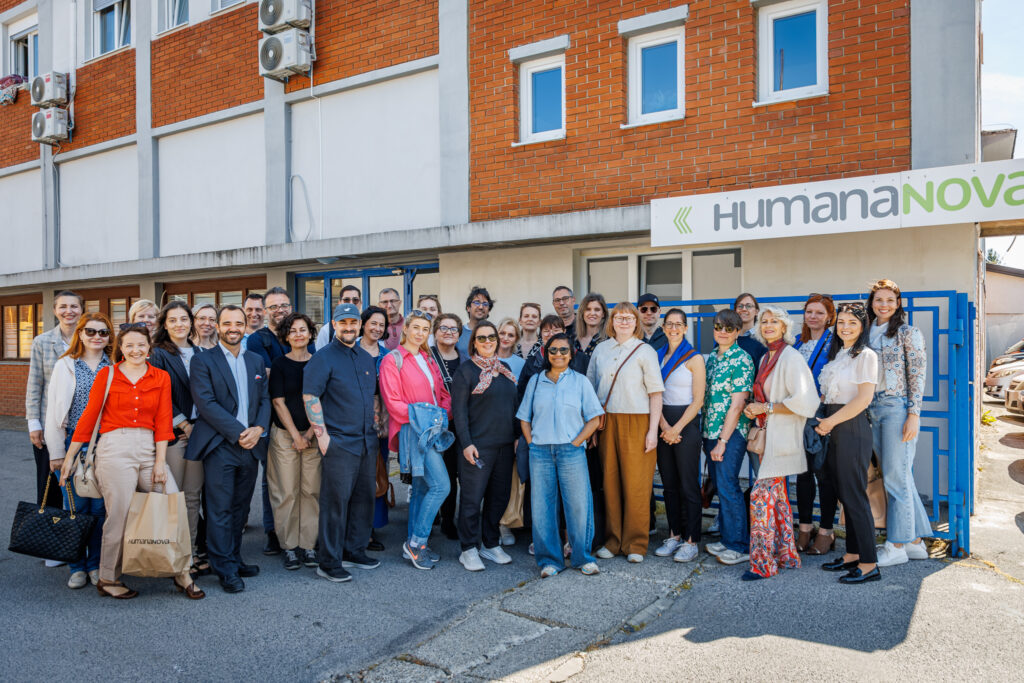
On the morning of the second day, participants visited Humana Nova, a social enterprise based in the Čakovec, administrative center of Međimurje County that employs people with disabilities and others in vulnerable labour market positions through textile recycling and reuse.
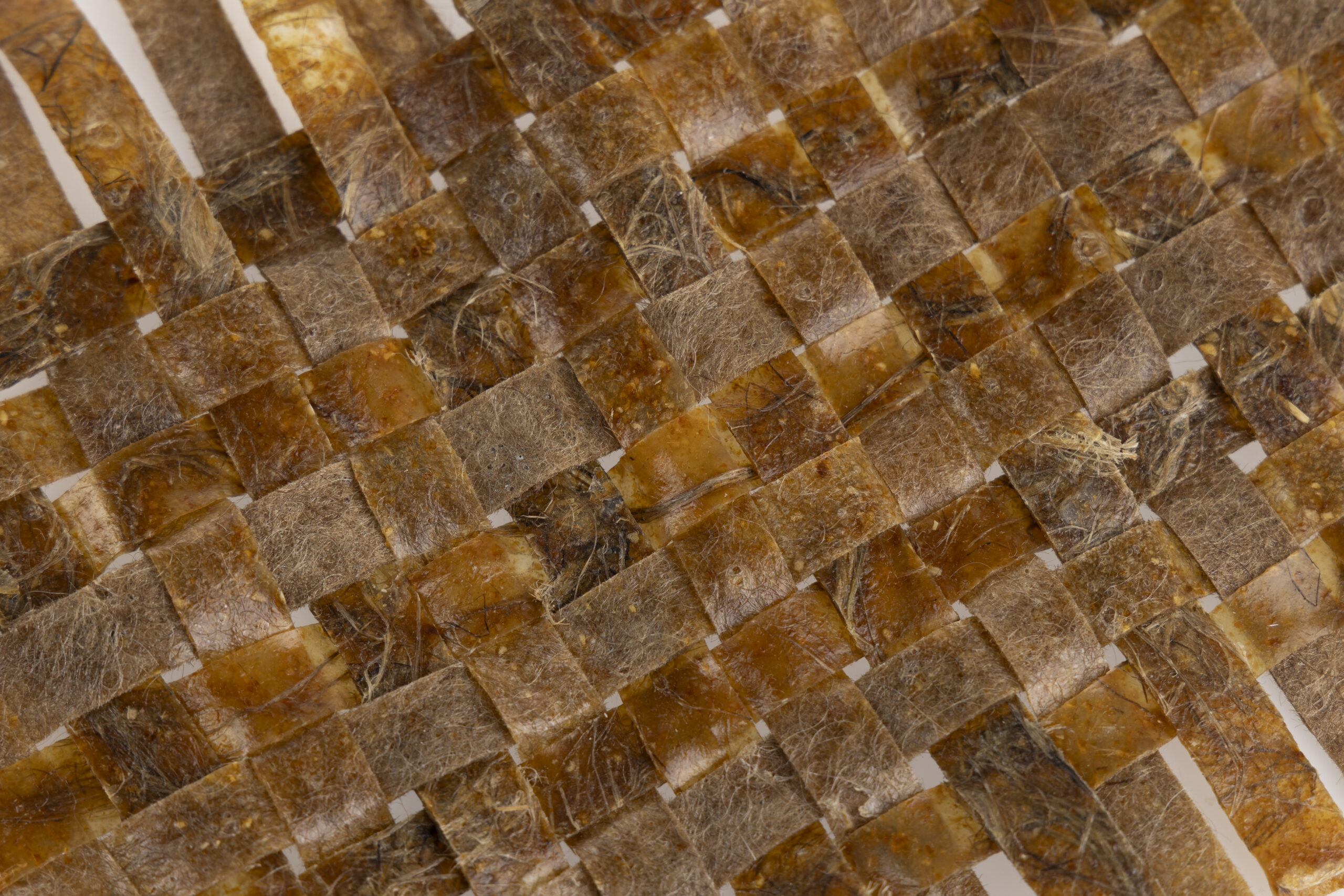
The company applies several circular economy practices to further process and utilise textile waste. These include repurposing mixed textile fibres as protective felt materials, as well as upcycling methods in which garments are either resold as they are or transformed into entirely new products.
Pre-kom’s Centre for Reuse (CPU) provides a practical example of collaboration between the public and private sectors in waste collection and sorting. The organisation receives donated goods from local residents and works extensively with the reuse and repurposing of discarded materials.
In Croatia, landfill sites are still commonly used as the final destination for waste, making initiatives such as CPU an important alternative within the transition towards more circular practices. The centre has also been recognised as part of the DeCo project’s Good Practice network.
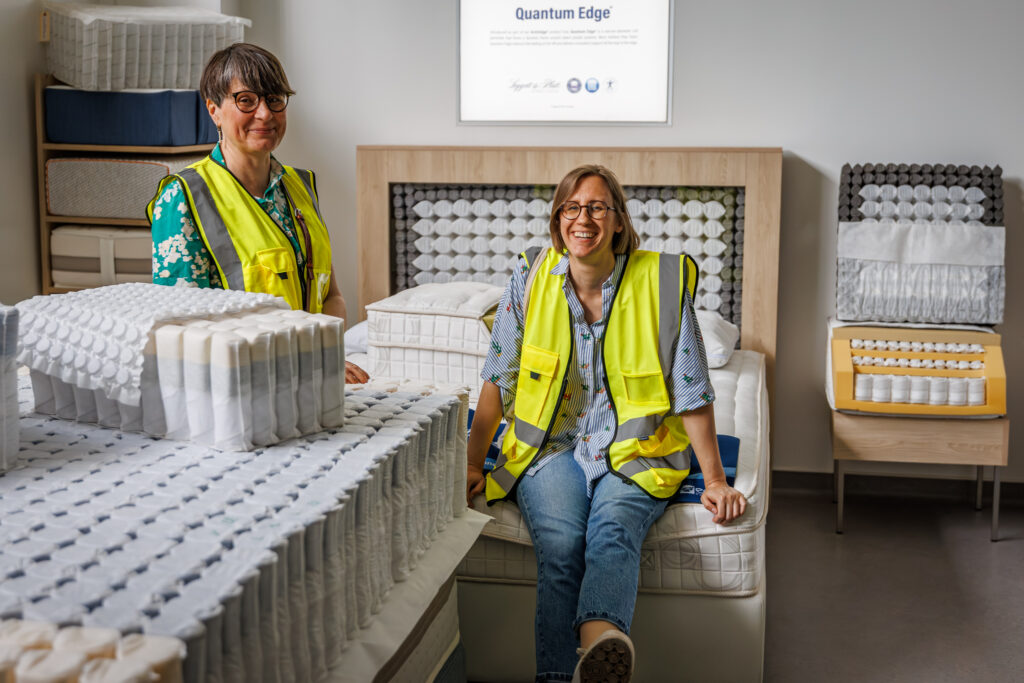
The final company visit of the programme took participants to LPT Prelog, a manufacturer of mattress support components and part of the North American Leggett & Platt group. The Croatian production facility demonstrated a highly specialised and strongly automated manufacturing process.
The company also presented several ongoing sustainability initiatives, including investments in solar energy, improvements in material resource efficiency and efforts to reduce carbon emissions through the development of steel manufacturing processes. As a subcontractor operating within international supply chains, these measures have an impact that extends across the broader value chain.
Special thanks to the REDEA team for the excellent organisation of the visit and for the opportunity to explore the Međimurje!
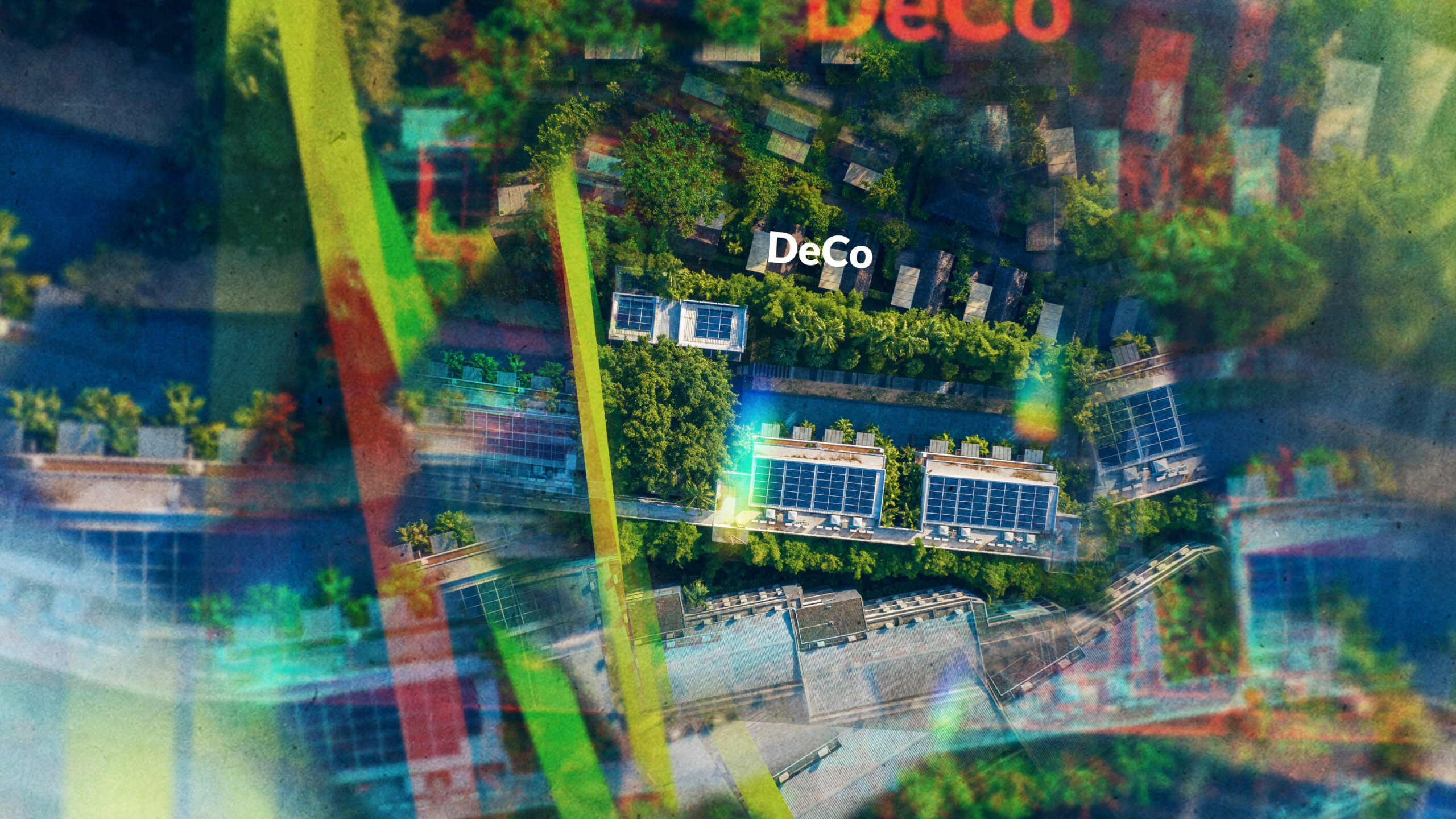
Cover image: DeCo | Matej Ščavničar / Terca Art
Article images: DeCo | Ivana Levačić / Terca Art
What is DeCo?
Design Collaboration for Sustainable Business (DeCo) is an Interreg Europe-funded project aimed at strengthening regional and national initiatives that promote sustainable design, production, and manufacturing based on circular economy principles. The project brings together ten regional partners from seven European countries: Croatia, Spain, Greece, Poland, Belgium, the Czech Republic, and Finland. DeCo supports the EU’s goals of reducing emissions, increasing the use of sustainable products, developing circular business models, and encouraging consumers to transition to greener choices. The project achieves these objectives by sharing knowledge on practical experiences and innovative approaches, and by building skills. Knowledge exchange is a key component, enabling participants to learn from one another, form new partnerships, and even launch new initiatives.
Read more.