News
Timo Sarpaneva 100 Years – Celebrating the Centenary of a Pioneer of Finnish Design on the International Stage
- Design
- Sustainable design
Professor Timo Sarpaneva’s birth centenary will be celebrated this year, marking 100 years since his birth on 31 October 1926. One of the leading innovators of Finland’s golden age of design, Sarpaneva played a pivotal role, alongside his contemporaries, in bringing Finnish design to international prominence. Over a career spanning more than six decades, he challenged the boundaries between art and industrial design, working boldly across a wide range of materials and disciplines, including glass, porcelain, metal, cast iron, textiles and graphic design. His work remains an essential part of Finland’s international design heritage.
Timo Sarpaneva was born in Helsinki on 31 October 1926. He gained international recognition in the 1950s, during a period of exceptional success for Finnish design on the world stage. At the Milan Triennials, prestigious international exhibitions celebrating design and the arts, Sarpaneva received numerous awards from 1951 onwards. His work played a significant role in establishing Finland’s reputation as a country of modern design and outstanding craftsmanship.
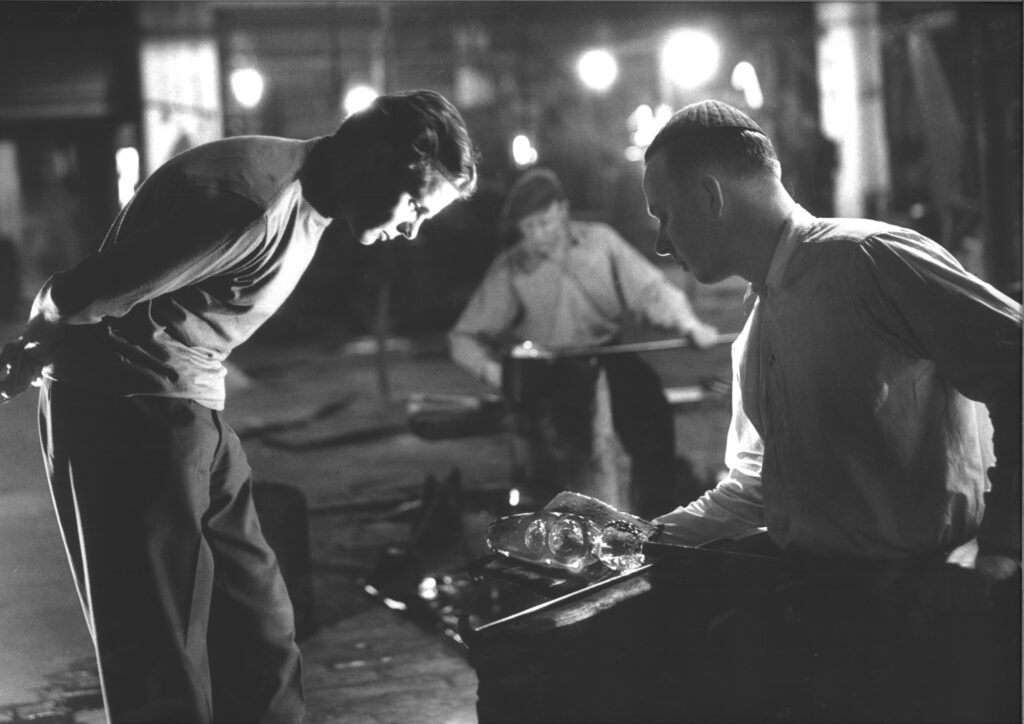
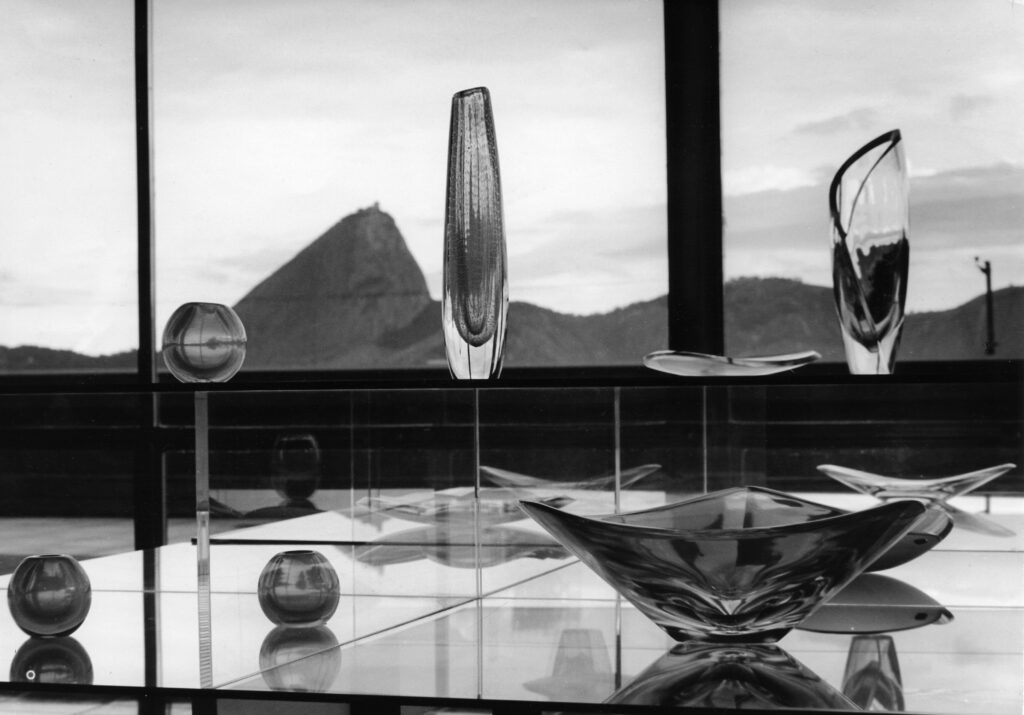
Sarpaneva’s approach was rooted in the continuous exploration of the possibilities offered by different materials. This curiosity led him to develop new production techniques and forms of expression, significantly shaping the identity of Finnish design. Glass became a particularly important material in his work, giving rise to celebrated and award-winning pieces such as Kajakki (1953), Orkidea (1954), the Tsaikka glögg glass (1957) and the Festivo candleholders (1966).
Throughout his long career, Sarpaneva collaborated with leading manufacturers, including Iittala and Rosenlew in Finland, Rosenthal in Germany and Venini in Italy. His work ranged from unique art objects to mass-produced everyday items and complete product collections, as well as textiles, exhibition design and graphic design.
Many of his designs have become enduring classics of Finnish design. His works are represented in major museum collections around the world, including the Museum of Modern Art (MoMA) and the Metropolitan Museum of Art in New York, the Victoria and Albert Museum in London, the Architecture & Design Museum in Helsinki and the Finnish Glass Museum.
An International Career That Shaped the Image of Finnish Design
In the challenging post-war years, Timo Sarpaneva and his contemporaries played a key role in building Finland’s international reputation for design. Their achievements at the Milan Triennials in the 1950s were exceptional and helped establish Finnish design on the world stage. This success opened doors for the young Sarpaneva, paving the way for an internationally acclaimed career. His work was exhibited around the world, and he collaborated with renowned international manufacturers such as Rosenthal and Venini, both of which continue to produce his designs today.
Throughout his career, Sarpaneva received numerous Finnish and international awards and honours. These included Grand Prix awards at the Milan Triennials in the 1950s, the Lunning Prize (1956), the Pro Finlandia Medal (1958), an honorary doctorate from the Royal College of Art (1967), the title of Professor (1976) and the Golden Estlander Medal awarded by Design Forum Finland (2000).
From Glass to Textiles, and from Industry to Art
Sarpaneva is best known for his glass art and glassware, but his exceptionally wide-ranging body of work also encompassed other materials, including textiles, cast iron, steel and porcelain. His approach was often rooted in an understanding of the material and its production process. He worked in close collaboration with glassblowers, craftspeople, technical experts and industry. This close cooperation led to innovations in the treatment and manufacture of materials.
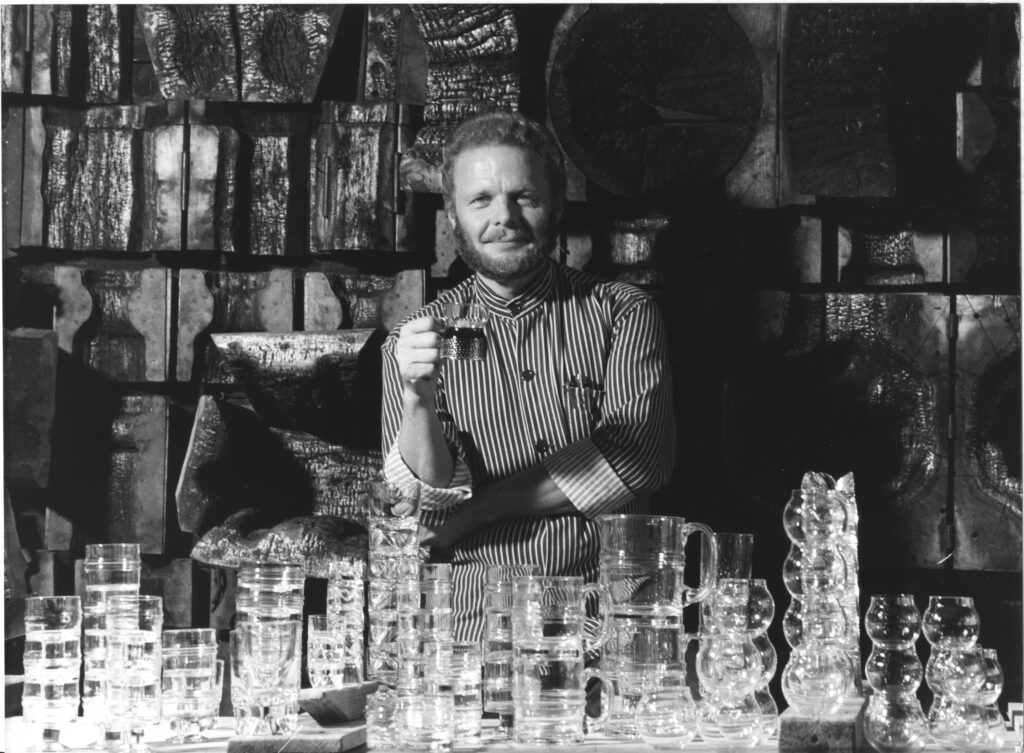
One example is the textured glass developed for the Finlandia series (1964), in which the pattern of charred wood was transferred onto the surface of the glass. The technique, and its variations, became one of the most widely imitated methods in glassmaking. The Archipelago technique (1978), in turn, made it possible to create small air bubbles inside glass with greater efficiency. In textile production, Sarpaneva developed the Ambiente dyeing method, also known as “painting by machine”, which transformed fabric patterning in the 1960s. These innovations further strengthened his international reputation.
Timo Sarpaneva’s Centenary Year
The year 2026 marks 100 years since the birth of designer and Professor Timo Sarpaneva. The centenary celebrations highlight his life’s work and his significance to Finnish design and glass art, both in Finland and internationally. At the Finnish Glass Museum in Riihimäki, the exhibition KUPLA – Captured in Glass: Timo Sarpaneva 100 Years is on display until the end of the year.
The exhibition presents a broad overview of Sarpaneva’s work, from the 1950s to his final pieces, completed in 2000. Particular attention is given to glassblowing techniques and their diverse possibilities in both industrial design and studio practice.
The centenary year serves as a reminder of Sarpaneva’s importance to Finnish design, while also highlighting the bold and open-minded approach that characterised his work. In post-war Finland, resources were scarce, yet Sarpaneva and his contemporaries laid the foundations for Finnish design’s international standing.
This legacy remains relevant today. Renewal requires the courage to think differently, experiment with new ideas and move forward with determination.