News
Designs for a Cooler Planet Exhibition Makes the Future Visible
- Circular design
- Design
- Sustainable design

Miia Pöytälaakso
Communications Specialist
+358 400 613 530
miia.poytalaakso@designforum.fi
What might the future look like if building materials could store carbon, waste could be transformed into new products, and prostheses could function increasingly as extensions of the human body? At Aalto University’s Designs for a Cooler Planet 2026 exhibition, sustainability is explored through research, design, and hands-on experimentation.
Opening in September, the Designs for a Cooler Planet 2026 exhibition brings together more than 20 projects by Aalto University students and researchers at Marsio. The projects explore themes including sustainable architecture, the energy transition, circular materials, health and emerging technologies. The exhibition features concrete prototypes and material experiments alongside research whose wider impacts may only become visible in the years ahead. Its aim is to make research and innovation tangible and to demonstrate the potential of interdisciplinary collaboration.
From By-products to New Materials
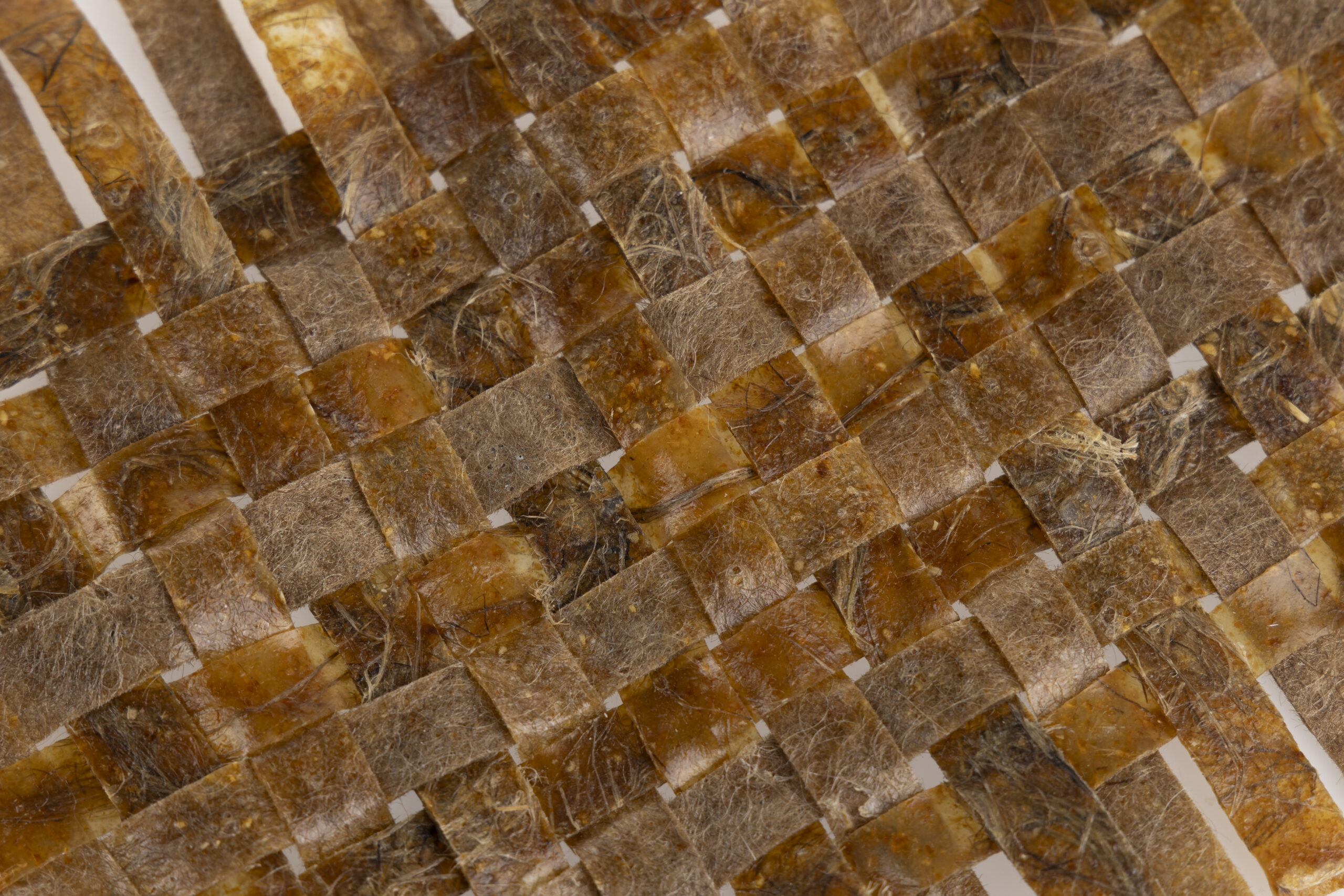
One of the exhibition’s key themes is giving materials a new life. Several projects explore how side streams and waste can be transformed into new materials and products. Examples include seaweed-based eyewear frames, textile dyes made from agricultural waste and insulation materials produced from discarded textiles.
The exhibition also explores bio-based construction materials and insulation made from natural materials. Aalto researchers are developing construction materials that can incorporate materials such as sawdust, recycled fibres and cardboard, with the aim of keeping the carbon stored in biomass locked into the material. Natural-material-based insulation solutions are also being developed for renovation and retrofit projects.
The focus extends across the entire life cycle of materials. Developing a new material alone does not resolve the challenges of sustainability; it is equally important to consider what happens to the material after use and what environmental impact it leaves behind. The exhibition highlights this long-term perspective and considers how today’s material choices may shape the future for decades or even centuries to come.
Design as Part of Research
Across the exhibition, design extends well beyond the appearance of products. It is used to develop services and user experiences, explore new applications for materials, and consider how technologies can become functional and meaningful parts of everyday life. Design also helps examine how new solutions respond to user needs and the environments in which they are used.
One example is the KOSKE service, which supports the employment of highly educated immigrants by using participatory service design to connect jobseekers’ skills with opportunities in the labour market. According to Aalto University, more than half of the service’s users find employment in their own field.
Elsewhere, researchers examine the use of chat-based services in remote healthcare and what the resulting data can reveal about the growth and development of digital health services. The research aims to generate insights that can support the development of digital healthcare and decision-making.
The role of design is also explored through the exhibition’s programme on materials research. The event Designers in Materials Research – From CHEMARTS to Biodesign, taking place on 24 September, examines how design can contribute to the development of bio-based materials and what roles designers can play in interdisciplinary research.
One particularly interesting example is a concept stroller developed through a collaboration between Aalto’s CHEMARTS programme and Dutch company Bugaboo. Students explored seven different material solutions using, among other things, sawdust, hemp, lignin, starch, recycled fibres, orange peel and wool waste. The stroller’s backrest, for example, incorporates a sawdust–methyl cellulose composite, while its canopy is made from orange peel and wool waste. The experiments investigate how renewable resources and industrial side streams could be used in future products. The collaboration with an established company also brings the requirements of a real product and potential applications into the material research process.
Where Design Meets Technology
Designs for a Cooler Planet goes beyond materials and physical products, showcasing projects in which technology is applied to healthcare, energy, space and digital services.
Researchers are, for example, developing a prosthesis whose control system learns from signals captured by hundreds of small muscle sensors. The aim is to interpret neural signals more accurately, enabling smoother control of the prosthesis and greater independence in everyday life.
Small satellites, meanwhile, are playing an increasingly important role in navigation, communications and environmental monitoring. According to Aalto University, dozens of Finnish satellites are currently in space, with Aalto expertise involved in the majority of them in some capacity. Aalto is also one of the few universities in Europe where a small satellite can be designed and built from start to finish.
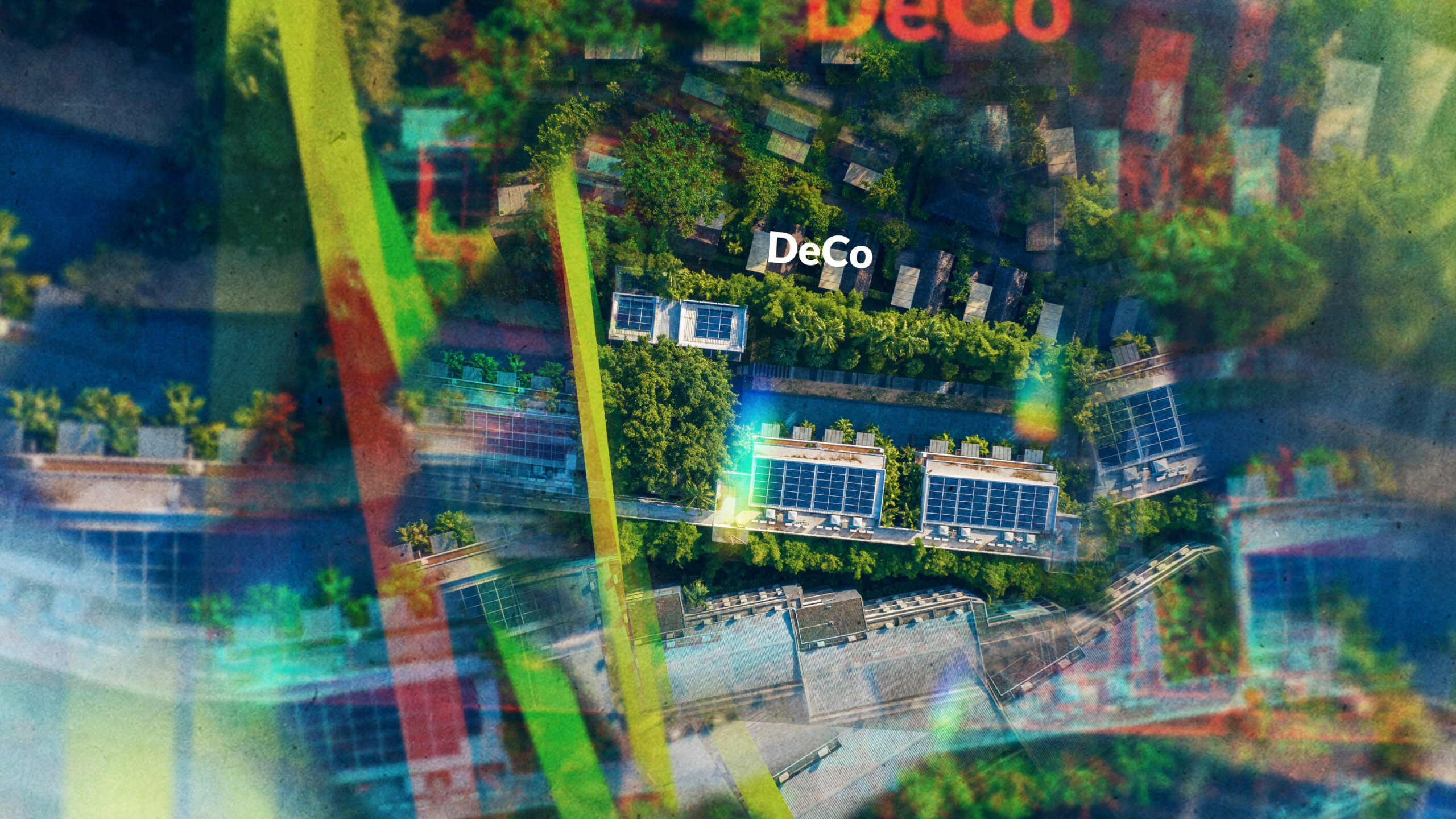
The intersection of technology and sustainability is also explored through other projects. The Aalto-led SuperC consortium is using artificial intelligence to search for a room-temperature superconductor, while a new metal–polymer interface for hydrogen fuel cells aims to make the cells lighter, more compact and less expensive to manufacture. The exhibition also addresses the growing energy consumption of data centres and the reuse of buildings.
Designs for a Cooler Planet 2026
1 September–30 October 2026
Marsio, Otakaari 2, Espoo, Finland
Admission is free.
The main exhibition space is open Monday–Thursday 7:45–21:00 and Friday 7:45–20:00. The exhibition is closed on weekends.